
Daily Journal Corporation Portfolio in 2026: Top Holdings & Recent Changes
Welcome to the Value Sense Blog, your resource for insights on the stock market! At Value Sense, we focus on intrinsic value tools and offer stock ideas with undervalued companies. Dive into our research products and learn more about our unique approach at valuesense.io
Explore diverse stock ideas covering technology, healthcare, and commodities sectors. Our insights are crafted to help investors spot opportunities in undervalued growth stocks, enhancing potential returns. Visit us to see evaluations and in-depth market research.
Charlie Munger, the legendary vice chairman of Berkshire Hathaway and long-time partner of Warren Buffett, continues to demonstrate why patience and discipline define exceptional investing. His Daily Journal Corporation's Q4 2025 portfolio reveals a masterclass in ultra-concentrated value investing, with just four carefully selected positions totaling $276.7 million. This portfolio exemplifies Munger's philosophy: when you truly understand a business, conviction demands concentration. With zero portfolio turnover and an extraordinary 41-quarter average holding period, this is not a portfolio built on trends—it's built on conviction.
Portfolio Overview: The Power of Extreme Conviction
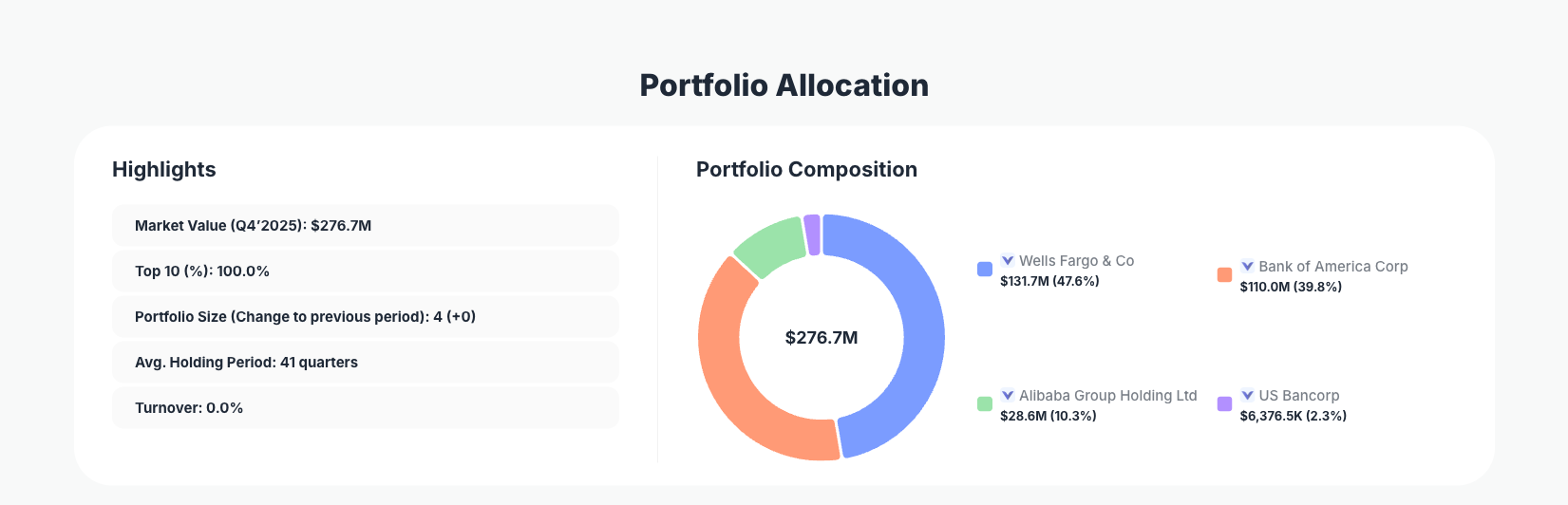
Portfolio Highlights (Q4 2025): - Market Value: $276.7M - Top 10 Holdings: 100.0% - Portfolio Size: 4 positions - Average Holding Period: 41 quarters (over 10 years) - Turnover: 0.0%
The Daily Journal Corporation's portfolio represents one of the most concentrated and stable investment vehicles in the world. With only four holdings and zero turnover, this is a portfolio that reflects decades of conviction rather than quarterly repositioning. The 100% concentration in the top 10 holdings simply means all four positions are among the most significant—there are no secondary holdings to dilute the thesis.
This extreme concentration is not reckless; it's the result of deep analysis and unwavering confidence. Munger has famously stated that investors should only invest in businesses they truly understand, and this portfolio proves he practices what he preaches. The 41-quarter average holding period—approximately 10.25 years—demonstrates that these are not trading positions but long-term wealth-building vehicles. The zero turnover in Q4 2025 signals complete satisfaction with the current positioning.
What makes this portfolio particularly instructive for value investors is its refusal to chase performance or follow market trends. In an era of constant portfolio rebalancing and algorithmic trading, Daily Journal's approach stands as a quiet rebellion against the tyranny of short-term thinking.
Top Holdings Analysis: Banking Giants and Asian Opportunity
The portfolio is anchored by Wells Fargo & Co at 47.6% of the portfolio, representing $131.7 million in value. This dominant position reflects Munger's long-standing belief in the fundamental strength of American banking, despite the sector's well-documented challenges. Wells Fargo's position has remained unchanged, signaling continued confidence in the bank's recovery trajectory and dividend-paying capacity.
The second-largest holding is Bank of America Corp, comprising 39.8% of the portfolio with a value of $110.0 million. This substantial position in another major U.S. bank reinforces the portfolio's banking-centric strategy. Like Wells Fargo, Bank of America has seen no change in the latest quarter, indicating that Munger views both institutions as appropriately valued and positioned for long-term value creation. Together, these two banking giants represent 87.4% of the entire portfolio—a bold statement about the sector's attractiveness at current valuations.
Diversifying the portfolio geographically and sectorally is Alibaba Group Holding Ltd, which comprises 10.3% of the portfolio valued at $28.6 million. This position represents Munger's willingness to look beyond U.S. borders for value opportunities. Alibaba, despite regulatory headwinds in China, remains one of the world's most significant e-commerce and technology platforms. The unchanged position suggests confidence that current valuations reflect a margin of safety.
Rounding out the portfolio is US Bancorp, a smaller position at 2.3% of the portfolio valued at $6.4 million. This regional banking player completes the financial services emphasis, adding exposure to a different segment of the banking sector. The unchanged status across all four holdings demonstrates remarkable portfolio stability.
What the Portfolio Reveals About Current Strategy
This portfolio tells a compelling story about Munger's current investment philosophy:
Banking Sector Conviction: With 87.4% deployed in Wells Fargo and Bank of America, Munger is making a clear statement about the attractiveness of large-cap U.S. banking stocks. Despite regulatory scrutiny, rising interest rates, and economic uncertainty, he views these institutions as offering compelling value. This conviction likely reflects his assessment that these banks are trading below their intrinsic value while offering attractive dividend yields.
International Diversification: The 10.3% allocation to Alibaba demonstrates that Munger hasn't abandoned international opportunities despite geopolitical tensions. This position suggests he sees value in Chinese technology despite regulatory risks—a calculated bet that long-term growth will overcome near-term headwinds.
Quality Over Growth: The portfolio contains no high-growth technology stocks, no speculative positions, and no trendy sectors. Instead, it focuses on established, profitable businesses with strong competitive moats and reliable cash flows. This reflects Munger's core belief that quality businesses justify premium prices, but only when those prices reflect a margin of safety.
Dividend Strategy: All four holdings are dividend-paying stocks, suggesting that the portfolio is designed to generate steady income alongside capital appreciation. This income-focused approach is particularly relevant for a holding company like Daily Journal, which can distribute earnings to shareholders.
Risk Management Through Conviction: Rather than diversifying across dozens of positions, Munger manages risk through deep understanding and conviction. He knows these businesses intimately and believes that concentrated positions in high-quality companies offer better risk-adjusted returns than diluted portfolios.
Portfolio Concentration Analysis
| Position | Value | % of Portfolio | Recent Change |
|---|---|---|---|
| Wells Fargo & Co | $131.7M | 47.6% | No change |
| Bank of America Corp | $110.0M | 39.8% | No change |
| Alibaba Group Holding Ltd | $28.6M | 10.3% | No change |
| US Bancorp | $6.4M | 2.3% | No change |
The concentration metrics reveal a portfolio structure that would make most financial advisors uncomfortable—yet has delivered exceptional long-term results. With the top two holdings representing 87.4% of the portfolio, this is an extreme concentration play. However, this concentration is not a flaw; it's a feature. Munger has repeatedly argued that investors who truly understand a business should concentrate their bets rather than dilute them across mediocre alternatives.
The stability of these positions—with zero changes in Q4 2025—suggests that Munger views current valuations as appropriate. There's no panic selling despite market volatility, and no opportunistic buying despite potential market dislocations. This equilibrium reflects a portfolio that has reached an optimal allocation according to Munger's valuation framework.
The 41-quarter average holding period means that the average position has been held for over a decade. This extraordinary patience is the antithesis of modern portfolio management, where quarterly rebalancing and tactical adjustments are standard practice. Yet this approach has proven remarkably effective, allowing compound returns to work their magic while minimizing taxes and transaction costs.
Most investors waste time on the wrong metrics. We've spent 10,000+ hours perfecting our value investing engine to find what actually matters.
Want to see what we'll uncover next - before everyone else does?
Find Hidden Gems First!
Investment Lessons from Charlie Munger's Approach
Concentration Requires Conviction: Munger's portfolio demonstrates that extreme concentration is only appropriate when you possess genuine conviction based on deep analysis. The 47.6% position in Wells Fargo isn't reckless; it reflects decades of banking industry expertise and careful valuation analysis. The lesson: concentrate only in businesses you truly understand.
Holding Periods Matter More Than Trading Frequency: With a 41-quarter average holding period and zero turnover, this portfolio proves that long-term wealth creation comes from patient capital, not active trading. The power of compound returns, combined with tax efficiency and reduced transaction costs, creates a significant advantage over frequent traders.
Quality Businesses Justify Premium Prices—When There's a Margin of Safety: All four holdings are high-quality, profitable businesses with strong competitive advantages. Yet Munger holds them because he believes they're trading at prices that offer a margin of safety. The lesson: quality and value are not mutually exclusive when you're patient enough to wait for the right price.
Diversification Through Understanding, Not Through Quantity: Rather than owning 50 mediocre businesses, Munger owns four excellent businesses. The diversification comes from sector variation (banking and technology) and geography (U.S. and China), not from quantity. This approach reduces complexity while maintaining appropriate risk management.
Ignore Market Noise and Follow Your Analysis: In Q4 2025, with zero portfolio changes despite whatever market turbulence occurred, Munger demonstrated the discipline to ignore short-term noise and stick with his long-term thesis. This requires conviction, patience, and confidence in your analytical framework.
Income and Capital Appreciation Are Complementary: By focusing on dividend-paying stocks, Munger creates a portfolio that generates steady income while maintaining exposure to capital appreciation. This dual benefit is particularly valuable for long-term wealth building.
Looking Ahead: What Comes Next?
The Daily Journal Corporation's portfolio positioning suggests several potential scenarios for future moves:
Banking Sector Opportunities: If interest rates decline or economic conditions deteriorate, Munger may see opportunities to add to banking positions at even more attractive valuations. Conversely, if banks face regulatory headwinds, he may trim positions selectively. The current unchanged status suggests he's comfortable with current allocations.
Alibaba's Long-Term Potential: The 10.3% position in Alibaba represents a bet on Chinese economic recovery and the company's ability to navigate regulatory challenges. If geopolitical tensions ease or Chinese growth accelerates, this position could become a significant driver of returns. Alternatively, if regulatory risks intensify, Munger may reassess.
Cash Deployment Opportunities: With a $276.7 million portfolio and zero turnover, Daily Journal likely has limited dry powder for new investments. However, if a truly exceptional opportunity emerges—a business trading at a significant discount to intrinsic value—Munger's track record suggests he would act decisively.
Succession and Legacy: As Munger approaches his later years, the Daily Journal portfolio serves as a template for long-term value investing. The stability and quality of these holdings suggest a portfolio designed to outlast its creator, providing a lasting example of disciplined, patient capital allocation.
FAQ About Charlie Munger's Daily Journal Portfolio
Q: Why does Daily Journal hold only four stocks when diversification is considered essential?
A: Munger has long argued that diversification is for investors who don't understand their holdings. When you possess genuine conviction based on deep analysis, concentration in high-quality businesses offers superior risk-adjusted returns. The four holdings represent different sectors (banking and technology) and geographies (U.S. and China), providing appropriate diversification without unnecessary dilution. The key is that each position must be thoroughly understood and valued below intrinsic value.
Q: What does zero portfolio turnover tell us about Munger's current outlook?
A: Zero turnover in Q4 2025 indicates that Munger views all four positions as appropriately valued and positioned for long-term value creation. There's no panic selling despite market conditions, and no opportunistic buying despite potential dislocations. This equilibrium suggests he believes the portfolio is optimally allocated according to his valuation framework. It's a statement of confidence in both the holdings and his analytical process.
Q: How can retail investors follow Daily Journal's portfolio using ValueSense?
A: ValueSense's superinvestor tracking tools allow you to monitor Daily Journal's portfolio in real-time, receiving alerts when positions change. By tracking the 13F filings (which are required quarterly disclosures for institutional investors holding over $100 million in securities), you can see exactly what Munger is buying and selling. Note that 13F filings have a 45-day reporting lag, so current positions may differ slightly from the most recent filing. ValueSense synthesizes this data into actionable insights, helping you understand not just what Munger holds, but why those holdings matter.
Q: Is the heavy banking sector concentration risky?
A: Concentration in any sector carries risk, but Munger's banking focus reflects his deep expertise in financial institutions and his belief that current valuations offer a margin of safety. Banking stocks are cyclical and sensitive to interest rates, economic growth, and regulatory changes. However, Wells Fargo and Bank of America are among the most resilient and profitable banks globally. The risk is real, but Munger has clearly decided that the potential returns justify the concentration.
Q: Could Alibaba's regulatory challenges cause Munger to exit the position?
A: Alibaba faces genuine regulatory risks in China, but Munger's unchanged position suggests he views current valuations as reflecting these risks appropriately. He's likely betting that long-term growth in Chinese e-commerce and technology will overcome near-term regulatory headwinds. However, if regulatory risks intensify significantly or if he reassesses the company's competitive position, he could reduce or exit the position. The 10.3% allocation is small enough that even a complete exit wouldn't dramatically impact portfolio returns.
Explore More Investment Opportunities
For investors seeking undervalued companies with high fundamental quality, our analytics team provides curated stock lists:
📌 50 Undervalued Stocks (Best overall value plays for 2026)
📌 50 Undervalued Dividend Stocks (For income-focused investors)
📌 50 Undervalued Growth Stocks (High-growth potential with strong fundamentals)
🔍 Check out these stocks on the Value Sense platform for free!